
Loading...
Serving Reno, NV and surrounding areas(775) 491-3183
Reno Insulation is an NSCB-licensed insulation contractor serving Incline Village, NV with closed-cell foam insulation, attic air sealing, and spray foam for lakeside and hillside properties on Lake Tahoe's northeast shore. We have completed insulation projects throughout the Tahoe Basin since 2019 and respond to every new request within 1 business day.
Incline Village sits at 6,350 feet above sea level on the northeast shore of Lake Tahoe in Washoe County, Nevada, covering roughly 21.7 square miles of forested Sierra Nevada terrain. The community is governed through the Incline Village General Improvement District (IVGID) — a quasi-public agency that manages four Lake Tahoe beaches, the Diamond Peak ski resort, a recreation center, two golf courses, and a park network for residents. IVGID's amenity model is directly tied to property ownership: homeowners receive picture passes and recreation privileges, which means the community attracts buyers who plan to stay and invest in their properties.
Wikipedia describes Incline Village as having some of the most expensive real estate in the United States. The residential stock ranges from lakefront properties and A-frame ski chalets to hillside ranch homes built during the 1960s and 1970s development era. Many of those older homes predate the energy codes that first required meaningful insulation, and their original assemblies — thin fiberglass batts, unsealed attic penetrations, uninsulated crawl spaces — were built for a climate that requires far more from a building envelope than they provide. The community's name traces back to the incline railway operated here in 1882 by the Sierra Nevada Wood and Lumber Company, which hauled timber up the mountain for the Comstock Lode silver mines below. Truckee, CA sits just over the state line on US-267 and faces similar high-altitude insulation demands.
The UC Davis Tahoe Environmental Research Center (TERC) operates Lake Tahoe's only science museum at the UNR Lake Tahoe campus on Country Club Drive — a LEED platinum-certified building that reflects the environmental standards residents here care about. Sand Harbor State Park, just south of town along Nevada State Route 28, draws visitors from across the region and serves as one of the most recognized local landmarks. The Tahoe East Shore Trail, linking Incline Village to Sand Harbor, is a signature local amenity that connects the community's hillside neighborhoods to the lakefront. North of Lake Tahoe, Sparks, NV is under one hour down the mountain on US-395, the primary valley connection for commuting residents.
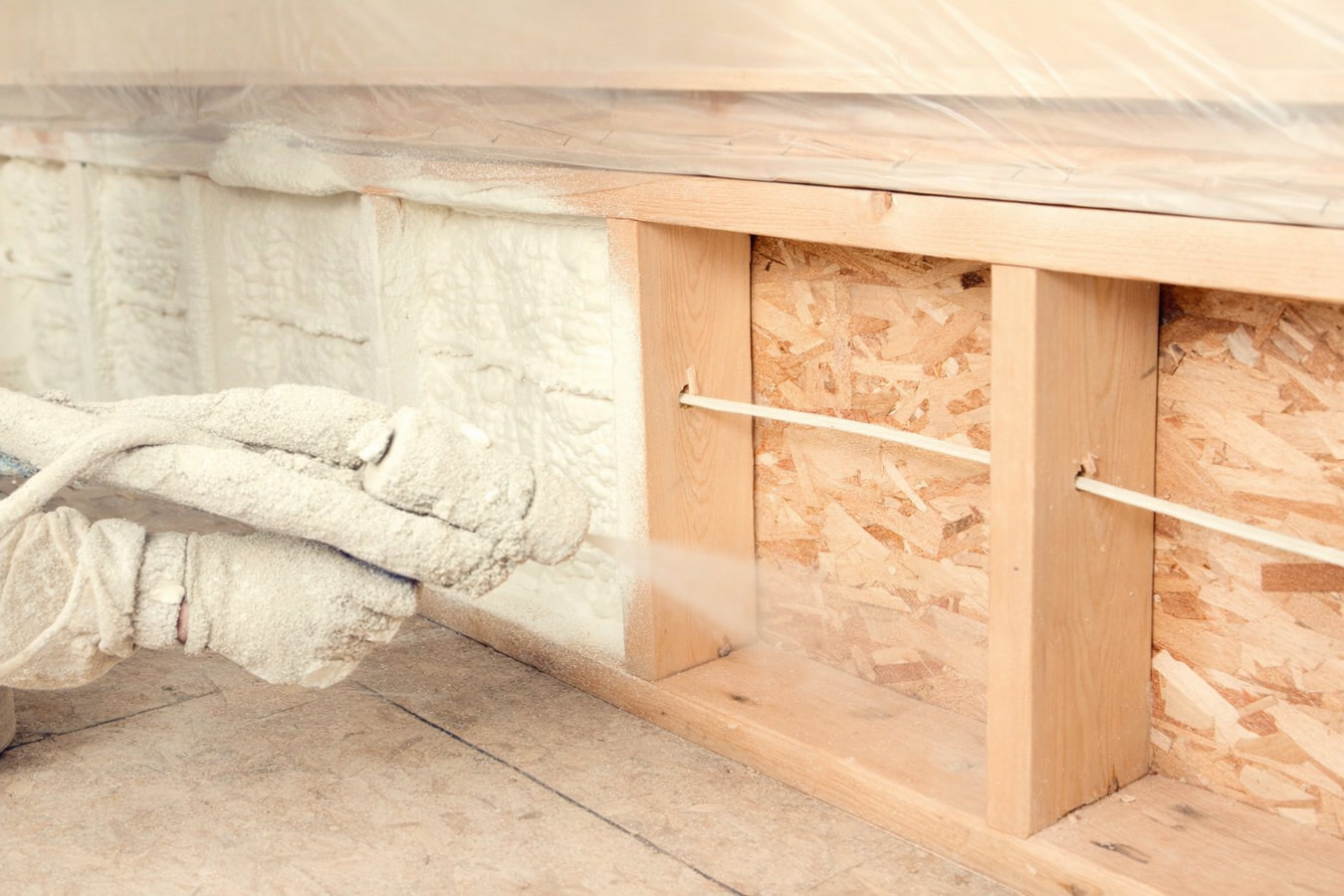
At 6,350 feet on Lake Tahoe's northeast shore, Incline Village homes face winter lows well below the valley floor. Closed-cell foam delivers R-6 to R-7 per inch — enough to meet Climate Zone 6B wall requirements within a standard 2x4 cavity — and its rigid matrix eliminates the convective bypass that makes nominal R-values meaningless in leaky mountain homes. A 3-inch application in rim joists and crawl space walls also doubles as a Class II vapor retarder, removing the need for separate poly sheeting.
Reno Insulation serves Truckee, CA, located just over the state line on US-267 from Incline Village. Truckee averages over 200 inches of snow annually and shares the same high-elevation closed-cell foam and attic air sealing needs as Incline Village properties.
Incline Village homes built during the 1960s through 1980s residential development typically have attic planes full of unsealed penetrations — recessed lights, plumbing chases, top-plate gaps — that blower door tests reveal as the dominant source of heat loss. Air sealing those pathways before adding blown-in insulation on top cuts heating costs far more than adding R-value alone. We use foam and caulk to close every identified leakage point before any insulation layer is placed.
The mix of lakeside A-frames, ski-chalet-style properties near Diamond Peak, and standard ranch homes in the IVGID-managed community creates a wide range of framing conditions. Two-component spray foam fills non-standard cavities, angled knee walls, and cathedral ceiling profiles without requiring precision-cut batts that rarely fit correctly in older Incline Village construction.
Homes on Incline Village's hillside lots above Lakeshore Boulevard often have partially exposed crawl spaces that see significant temperature swings between summer afternoons and winter nights. Insulating crawl space walls with closed-cell foam and sealing the ground liner brings those spaces inside the building envelope, stabilizing floor temperatures and reducing the heating load on IVGID properties year-round.
Elevation is the defining variable. At 6,350 feet, Incline Village experiences a humid continental climate (Köppen Dfb) — warm summers, cool nights, and winters with significant snowfall measured in feet rather than inches. Summer temperatures run 10 to 15 degrees cooler than Reno, which sounds pleasant until the snowpack arrives and those same properties face weeks of sub-freezing overnight lows without the mild recovery that valley homes get during the day.
The building code treatment for Incline Village differs from the valley floor. The community sits in IECC Climate Zone 6B — not Zone 5B like Reno — which carries higher minimum R-value requirements: R-60 in attics, R-21 in above-grade walls, and stricter vapor control expectations in wall and roof assemblies. Homes built before Nevada adopted energy codes in the 1990s often have R-11 or R-13 walls and attics well below the current threshold, meaning they operate at a structural deficit every winter.
Snow load and ice dam formation add a layer of risk that valley contractors do not regularly encounter. Ice dams form when attic heat escapes through an inadequately insulated roof deck, melts the snow above, and refreezes at the cold eave edge — forcing meltwater under shingles and into the structure. Closed-cell foam applied to the underside of the roof deck, or a well-detailed attic air seal combined with deep blown-in insulation, prevents the heat escape that initiates that cycle. For IVGID-area homeowners protecting significant asset value, that is not an optional upgrade.
The vacation property component adds a second dimension. A meaningful share of Incline Village homes are occupied part-time, left unheated or minimally heated for weeks at a time in winter. Those homes need envelope performance that holds conditions stable without continuous HVAC intervention — a requirement that poorly insulated properties simply cannot meet, regardless of how powerful the furnace is.
Incline Village crawl spaces and attics routinely fall below 40 degrees Fahrenheit from October through April — the minimum substrate temperature required for closed-cell foam to react, expand, and cure at the density and R-value specified on the product data sheet. Every winter project here requires drum heaters for chemical conditioning, contact thermometers to verify substrate temperatures before the crew sprays a single pass, and temporary heating in unheated spaces when conditions are borderline. That preparation step is the difference between foam that performs as rated and foam that looks right but does not hold its R-value over time. It is not a step that shows up in quotes from contractors who have not worked at this elevation before.
The primary road to and through Incline Village is Nevada State Route 28 (Lakeshore Boulevard) along the lake, with Mount Rose Highway (NV-431) linking the community to Reno via a high mountain pass that closes during severe storms. Permit authority here runs through the Washoe County Building Division, not an Incline Village city hall — IVGID manages recreation and utilities, but construction permits are a county function. We pull permits through Washoe County as standard practice. Carson City, NV is reachable down US-395 for customers who also own property in the capital area, and Truckee, CA on the California side of the basin shares the same elevation-driven foam application challenges we encounter here.
Reach us by phone at (775) 491-3183 or through the online contact form. We respond to all Incline Village inquiries within 1 business day and ask about your property — age of construction, current insulation, and whether the primary concern is winter heat loss, summer cooling, or a specific comfort complaint.
A licensed technician drives out to Incline Village, inspects the attic, crawl space, or target wall assembly, and tests substrate temperatures if a spray foam application is planned. The written estimate is itemized by scope and confirms whether a Washoe County building permit is required before the project is scheduled.
Most Incline Village residential foam and insulation projects complete in one to two days. The treated area must be ventilated for 24 hours after closed-cell foam application, but you do not need to leave the home; only the work zone needs to be kept clear.
We leave R-value documentation, product data sheets, and material certifications at the close of every project. If a Washoe County permit was pulled, we coordinate the inspection and provide the paperwork needed for any NV Energy efficiency rebate filing.
We serve Incline Village and the Tahoe Basin with NSCB-licensed insulation work, free on-site estimates, and responses within 1 business day.
(775) 491-3183Spray foam seals air leaks and adds R-value simultaneously, making it one of the most efficient insulation options for new construction and retrofits.
View serviceProper attic insulation keeps conditioned air inside your home and reduces the strain on your heating and cooling system year-round.
View serviceBlown-in cellulose or fiberglass fills irregular cavities and covers existing insulation gaps without tearing out walls or ceilings.
View serviceWhole-home insulation assessments and installations cover every area of your house to deliver consistent comfort and lower energy bills.
View serviceOld, damaged, or contaminated insulation is safely removed before new material is installed so your upgrade starts on a clean foundation.
View serviceInsulating your crawl space controls moisture, prevents pipe freezing, and improves floor temperatures throughout the home.
View serviceWall insulation reduces heat transfer through exterior and interior walls, improving comfort and cutting seasonal energy costs.
View serviceAir sealing closes gaps around penetrations, joints, and transitions so insulation performs at its rated R-value instead of being bypassed by drafts.
View serviceInsulating basement walls and rim joists prevents cold floors above and reduces the load on your furnace during Northern Nevada winters.
View serviceClosed-cell spray foam delivers the highest R-value per inch and doubles as a vapor and moisture barrier for demanding environments.
View serviceOpen-cell foam expands to fill hard-to-reach cavities and provides excellent sound dampening in addition to thermal performance.
View serviceSealing attic bypasses before adding insulation stops the stack effect that drives heat loss in winter and heat gain in summer.
View serviceA heavy-duty vapor barrier installed on the crawl space floor blocks ground moisture from migrating into structural framing and living areas.
View serviceVapor barriers are installed in crawl spaces, walls, and below-grade areas to manage moisture and protect insulation performance long-term.
View serviceRetrofit insulation upgrades existing homes without major renovation, using drill-and-fill or dense-pack methods for walls and floors.
View serviceCommercial insulation services cover warehouses, offices, and multi-unit buildings with code-compliant materials and efficient installation schedules.
View serviceServing these cities and communities.
Get a free on-site estimate from a licensed contractor who works regularly at Tahoe elevation. We respond within 1 business day.