Loading...
Serving Reno, NV and surrounding areas(775) 491-3183
Reno Insulation is an NSCB-licensed insulation contractor serving Sun Valley, NV with blown-in attic insulation, crawl space upgrades, and air sealing built for the North Valleys corridor. We have completed projects throughout unincorporated Washoe County since 2019 and respond to new inquiries within 1 business day.
Sun Valley is a census-designated place in unincorporated Washoe County, located approximately three miles north of downtown Reno along Nevada State Route 443. It is not an incorporated city, so residents rely on Washoe County for government services — including building permits and inspections — rather than a dedicated municipal government. The community covers roughly 14.9 square miles and had a population of 21,178 at the 2020 census, with a notably younger median age than the county overall and historically high rates of households with children.
Sun Valley's history begins with the federal Small Tract Act of 1938, which offered five-acre homestead parcels to families who agreed to live on them permanently. By the 1950s, affordable land north of Reno attracted working-class families who settled in modest homes across the high-desert lots. That homestead character still defines much of the community today — larger lots, owner-occupied properties, and a housing stock that predates the energy codes that would eventually require meaningful insulation levels. Reno Stead Airport, about two miles west of the community, anchors the North Valleys industrial zone and is a recognized landmark for anyone navigating the area.
To the south, Reno, NV is the nearest major urban service center, and we frequently complete projects in both areas on the same route north on US-395. East along I-80, Sparks, NV shares the same Washoe County climate and building stock characteristics as Sun Valley.
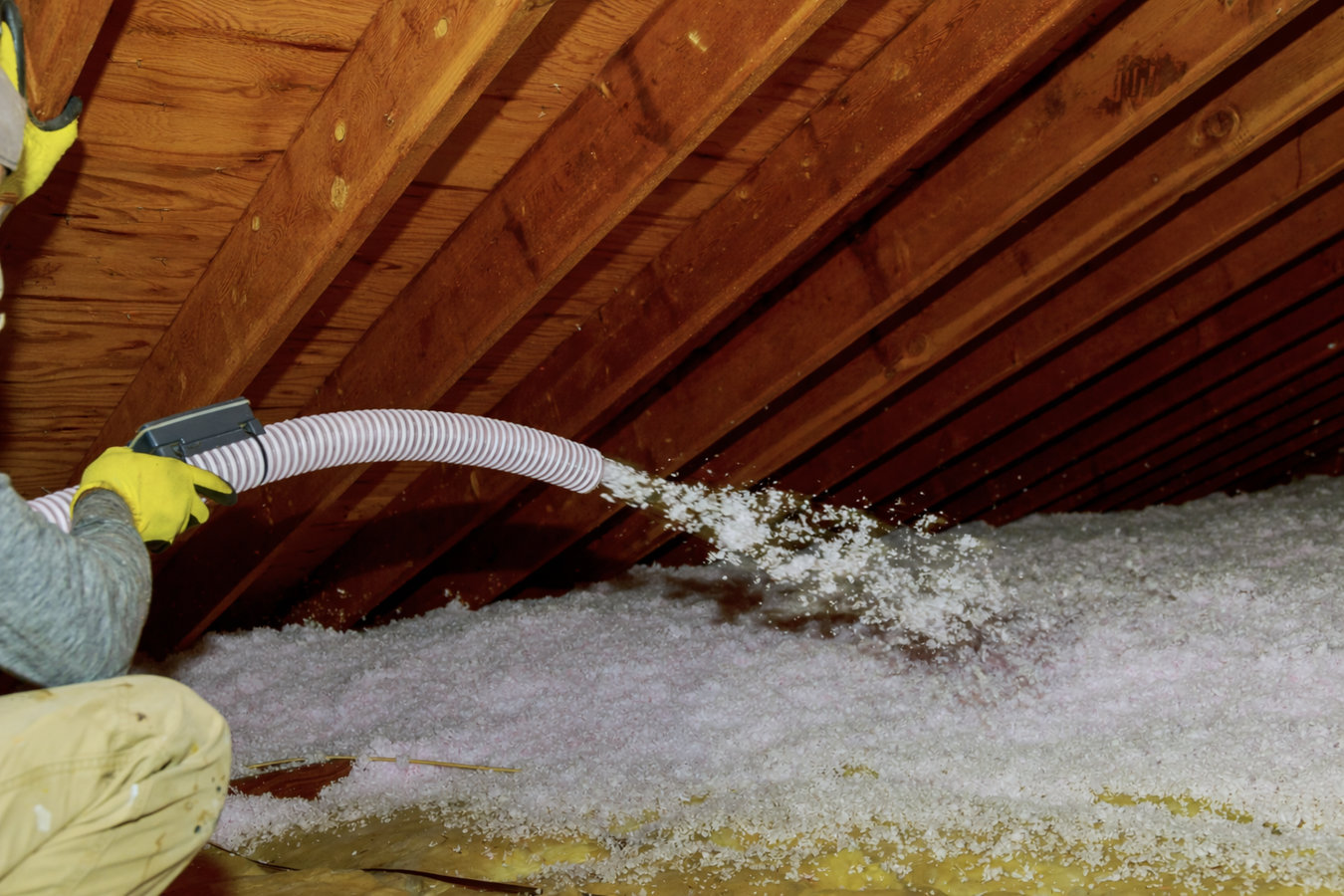
Sun Valley's older housing stock — many homes built on former homestead lots in the 1950s through 1970s — commonly has minimal original attic insulation. Blown-in cellulose or fiberglass is the most practical and cost-effective way to bring those attics from R-7 to the Zone 5B minimum of R-49 without opening walls or disturbing ceilings.
Sun Valley's larger residential lots and older home construction often mean vented crawl spaces with cold, uninsulated floors above them. Insulating the crawl space floor assembly or converting to a sealed encapsulated space reduces cold floors and cuts heating loads through the long North Valleys winter.
The North Valleys area north of Reno is exposed to open high-desert air with less urban wind-blocking, meaning cold air infiltration through attic bypasses is a significant heating load driver. Air sealing top plates, plumbing penetrations, and recessed can lights before blowing in insulation is what allows the R-value to perform at its rated level.
Spray foam is the right choice for rim joists, irregular framing in older Sun Valley homes, and crawl space walls where batt replacement is impractical. It creates a continuous air barrier while adding insulation, addressing both energy loss and fine particulate infiltration during smoke events that reach the North Valleys from Sierra Nevada fires.
Bringing a Sun Valley attic from its original R-7 to R-11 range up to R-49 is the single highest-impact upgrade most North Valleys homeowners can make. The North Valleys corridor experiences some of the coldest overnight temperatures in the Truckee Meadows basin, making attic performance especially critical from November through March.
Sun Valley's position in the North Valleys corridor means it sits in open high-desert terrain without the wind-breaking effect of Reno's denser urban core. On winter nights, cold air settles across the valley floor with few obstacles, pushing overnight temperatures lower than what homeowners just three miles south in central Reno experience. IECC Climate Zone 5B requires attic insulation of R-49 minimum — but for Sun Valley homes, that threshold is a floor, not a ceiling.
The community's homestead origins mean a large share of the housing stock was built before Nevada adopted modern energy codes. Homes from the 1950s and 1960s commonly have little to no meaningful attic insulation, and the original construction techniques — open framing, minimal vapor management, vented crawl spaces over cold soil — created conditions that make winter heating costs disproportionately high for the home's size. The average Sun Valley household with children has a strong financial incentive to fix those gaps: an under-insulated home with a young family running heat constantly through a North Valleys winter is one of the highest-utility scenarios we encounter in Washoe County.
The Washoe County Building Division governs all permitted construction work in Sun Valley. Because the community is unincorporated, permits are not issued by a city building department. Homeowners who hire contractors unfamiliar with unincorporated county jurisdiction sometimes encounter delays or incorrect permit filings; we confirm the correct process before the first estimate is signed.
Sun Valley homes on former homestead-era lots often have attic access hatches that open into low-clearance, irregularly framed spaces — conditions that make blowing insulation straightforward but that slow down a crew using standard-width hoses in tight quarters. We bring the right equipment for those spaces and do not discover the access problem on installation day. Sun Valley Regional Park and Rancho San Rafael Regional Park — the latter home to the annual Great Reno Balloon Race each September — are the community anchors we navigate around when routing crews through the NV-443 corridor.
NV-443 is the main road through Sun Valley, and most residential streets branch off it heading east toward the open desert and west toward the Stead Airport zone. We travel that route regularly on the same day as projects in Lemmon Valley, NV and Cold Springs, NV, which sit further north along the same North Valleys corridor and share many of Sun Valley's housing characteristics.
NV Energy rebate programs apply to qualifying insulation upgrades in Sun Valley homes, and the federal IRA 25C credit covers 30 percent of installed insulation cost up to $1,200 annually. We document every project with the product labels and installation records both programs require.
Reach us by phone or through the online form — we respond within 1 business day. Letting us know your home's approximate age and whether you have existing insulation in the attic helps us prepare the right tools and materials for the assessment.
A licensed technician measures existing insulation depth, inspects air sealing conditions throughout the attic floor plane, and confirms whether a Washoe County Building Division permit is required. The written estimate is itemized and comes with no obligation — cost is settled here, before work begins.
Most blown-in attic jobs in Sun Valley are completed in a single day. Spray foam and crawl space work may run one to two days depending on scope and access. You do not need to be present throughout, but someone should be available at start and completion.
We leave product data sheets, R-value coverage labels, and installation records on site. If a Washoe County permit was required, we coordinate the final inspection so the work is officially signed off — documentation needed for NV Energy rebate applications and at the time of any future sale.
We measure your existing insulation, check air sealing conditions in your attic, and give you a written estimate sized for the North Valleys climate — no obligation, and the assessment visit is always free.
(775) 491-3183Nevada State Contractors Board licensing is required for any insulation project over $1,000. Our active license is verifiable through the NSCB public portal, and our Sun Valley work is permitted through the Washoe County Building Division — the same authority that governs all construction in unincorporated Sun Valley.
Reno Insulation has completed attic and crawl space projects throughout Sun Valley and the broader North Valleys corridor since 2019. We know the Washoe County Building Division permit process, the older housing stock north of Reno along NV-443, and the conditions that make North Valleys homes particularly cold in winter.
Sun Valley falls in IECC Climate Zone 5B alongside Reno and Sparks, and every project we complete there is specified to Zone 5B targets. Contractors who use national average R-values consistently under-insulate homes in this climate zone — a difference that shows up on the utility bill every winter.
Sun Valley is unincorporated Washoe County, which means permits go through the Washoe County Building Division rather than a city building department. We are familiar with that process and handle the permit application and inspection scheduling entirely — so homeowners do not have to navigate county government on their own.
Sun Valley homeowners contracting insulation work above $1,000 are entitled to Nevada's contractor licensing protections — but only when the contractor holds an active NSCB license. Our license is public and verifiable before you sign anything. The Washoe County permit record, product documentation, and R-value labels we leave on every job mean the investment is documented and protected long after we leave.
Spray foam seals air leaks and adds R-value simultaneously, making it one of the most efficient insulation options for new construction and retrofits.
View serviceProper attic insulation keeps conditioned air inside your home and reduces the strain on your heating and cooling system year-round.
View serviceBlown-in cellulose or fiberglass fills irregular cavities and covers existing insulation gaps without tearing out walls or ceilings.
View serviceWhole-home insulation assessments and installations cover every area of your house to deliver consistent comfort and lower energy bills.
View serviceOld, damaged, or contaminated insulation is safely removed before new material is installed so your upgrade starts on a clean foundation.
View serviceInsulating your crawl space controls moisture, prevents pipe freezing, and improves floor temperatures throughout the home.
View serviceWall insulation reduces heat transfer through exterior and interior walls, improving comfort and cutting seasonal energy costs.
View serviceAir sealing closes gaps around penetrations, joints, and transitions so insulation performs at its rated R-value instead of being bypassed by drafts.
View serviceInsulating basement walls and rim joists prevents cold floors above and reduces the load on your furnace during Northern Nevada winters.
View serviceClosed-cell spray foam delivers the highest R-value per inch and doubles as a vapor and moisture barrier for demanding environments.
View serviceOpen-cell foam expands to fill hard-to-reach cavities and provides excellent sound dampening in addition to thermal performance.
View serviceSealing attic bypasses before adding insulation stops the stack effect that drives heat loss in winter and heat gain in summer.
View serviceA heavy-duty vapor barrier installed on the crawl space floor blocks ground moisture from migrating into structural framing and living areas.
View serviceVapor barriers are installed in crawl spaces, walls, and below-grade areas to manage moisture and protect insulation performance long-term.
View serviceRetrofit insulation upgrades existing homes without major renovation, using drill-and-fill or dense-pack methods for walls and floors.
View serviceCommercial insulation services cover warehouses, offices, and multi-unit buildings with code-compliant materials and efficient installation schedules.
View serviceServing these cities and communities.
Call or submit a request and we respond within 1 business day. The on-site assessment is free, the estimate is written, and every project is permitted through Washoe County Building Division — fully documented from start to finish.